
Van Buren County Has No Verified Rolling Arrest Log
The official sheriff News page is the agency's main publishing channel. It carries notices and public-safety updates rather than a structured log of every booking. The site states no archive depth either. No seven-day or 30-day history appears there. That gap matters. A private page with the county name in its title should never stand in for an official Van Buren County roster. A careful search therefore blends several sources. It combines agency notices, a booking-record request, Iowa Courts Online, and clearly labeled local reporting. These sources move at different speeds. A sheriff statement may land first. A news article can follow days later. A court docket may keep developing long after the person leaves custody. Together they add context, though none of them amounts to a complete daily arrest roster.
How to Read a Van Buren County Blotter
Read an entry by its date, jurisdiction, and source quality, not by the photo. A solid multi-day check follows one event from the agency report all the way to the court outcome.
- Set a date range. Include the weekend or holiday before a delayed report and note the approximate incident location.
- Check the sheriff. Review the official News page and contact the office for an existing log or booking record.
- Identify the event source. Record which agency supplied the charge and whether a local outlet cites the sheriff or court.
- Search the docket. Use Iowa Courts Online for the case, allowing for filing delay, spelling differences, and protected matters.
- Request older material. Give the sheriff a full name, approximate booking date, agency, and precise record type.
Suspect something happened today? The 24 Hour Arrests page handles present-custody checks. This page tracks reports across several dates instead. It explains what survives after a short web window closes.
What an Arrest-Log Entry Can Establish
Van Buren County publishes no standard log, so the fields you get depend on the record that started the entry. Ask for the source. Filling gaps by guesswork only invites errors.
| Possible field | Reading rule |
|---|---|
| Person’s name | Confirm spelling and identity against the official record. |
| Incident, arrest, or booking date | These dates can differ; label the date exactly as the source does. |
| Arresting agency | Shows who reported the event, not who decides guilt. |
| Charge | Preserve “alleged” or “as booked” until the court resolves it. |
| Bond or court date | May change, and a blank value should not be interpreted. |
| Release information | Confirms a custody change, not dismissal of the case. |
| Photograph | No verified county photo-feed policy or public gallery was found. |
A news story usually holds fewer fields than a booking sheet. A court docket adds more. Case numbers, filings, hearings, amended charges, dismissals, pleas, judgments, and appeals all live there, though a docket is not a jail intake log.
Weekend and Holiday Arrest Reports Arrive Unevenly
No Van Buren County source posts arrests on a guaranteed weekend or holiday schedule. Claims of a Monday surge are guesswork. So is any promise that a missing weekend item appears after a fixed delay. The safer practice widens the date range. It also checks the incident date and the publication date. Booking and transport work can wrap up before anyone writes a public statement. A court filing may wait for the next business day. Regional newsrooms also pick which events earn an article. The posts that trickle in after a weekend reflect editorial and agency timing as much as enforcement activity. Count records only from a defined official dataset. A handful of selected stories can never support a county crime-rate claim.
Regional News Is Event-Driven, Not a Booking Archive
KILJ has run sheriff-sourced reports on Keosauqua, Milton, Bonaparte, Mount Sterling, and county traffic stops. Ottumwa Radio covers Keosauqua matters using sheriff and court information. These stories make useful secondary leads. Each one names an event, a source, and an approximate date. None of them enumerates all Van Buren County arrests. The KILJ report on a Keosauqua search-warrant event shows the format and its attribution clearly.
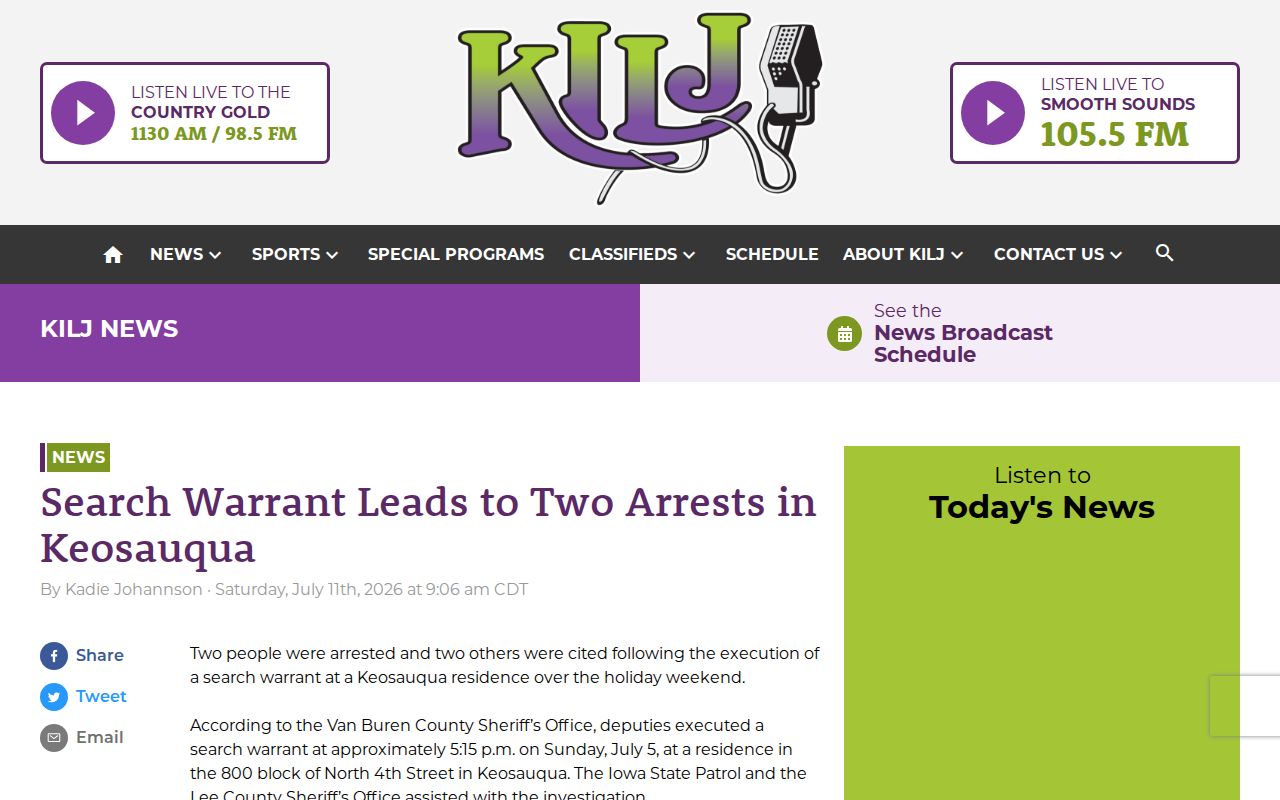
The court docket is where a story's eventual result lands. Take one example from Ottumwa Radio. Its report on a Van Buren County High School incident never named the student. It described a release to parents through Juvenile Court Services. That restraint tells you something. A juvenile missing from a public log is not necessarily a gap in the data. No reader should try to identify the student.
Third-Party Arrest Pages Require a State and Date Check
Secondary services fill part of the search landscape, but official sources come first. RecentlyBooked runs a Van Buren County, Iowa URL. It claims frequent updates plus a 30-day view. The county page can sit stale despite those claims. BustedNewspaper has an Iowa county path as well, though its live coverage varies. Neither service reflects the county's official posting policy or completeness. The RecentlyBooked county page shows an unofficial source. Its update status always deserves a check before you rely on it.
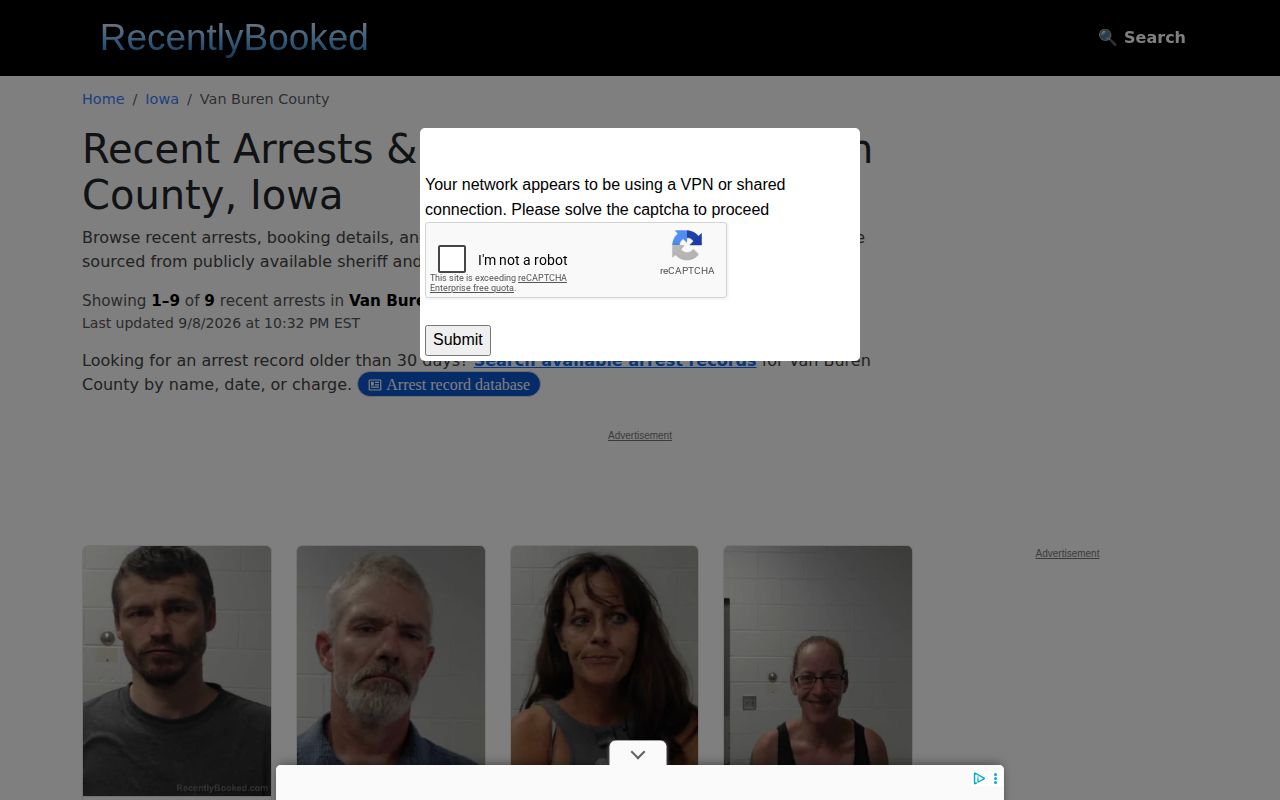
A third-party page may be stale or incomplete, so confirm any charge or image with the sheriff or the courts. Other search results carry a sharper risk. MyR2M rows labeled Van Buren can actually hold Arkansas records. Some services surface Michigan or Arkansas pages under an Iowa search. Treat none of them as Iowa sources. A commercial photo page is never a conviction record. No payment to a service changes an official one.
Archives Beyond the Published Arrest Window
Van Buren County publishes no long-run booking archive on the web. The sheriff sets no posted photo retention schedule for the public to browse. Absence online is not the same as absence altogether. A release from jail does not mean the intake record itself was destroyed. Preservation, public access, and what a search engine displays are three separate matters. Each follows its own rules.
To chase a modern record, call the sheriff. Ask two things: the retention schedule and the custodian. Give the person's name. Add a rough booking date, the arresting agency, and a booking number if you have one. Say what you want, whether an intake sheet, a release record, a log export, or a photo. Then ask where the record lives now. It may sit with the sheriff or have moved to another county office. It may have been destroyed under a schedule or be withheld under a cited law. Iowa Chapter 22 governs access to records that exist. It does not force the office to build a custom database for you.
For a court outcome, start with Iowa Courts Online. Then try the Van Buren County Clerk of Court at Office Fourth & Dodge in Keosauqua, (319) 528-5009. Historical Society collections and newspaper microfilm can aid older court or news digging. Neither serves as a current jail-photo repository.
Follow an Arrest Report to Its Court Outcome
A booking entry is only the start of the story. It lists the charge and the custody facts, little more. The court docket is where the case truly unfolds. It can show an initial appearance, bond conditions, a no-contact order, an amended charge, a plea, a dismissal, a deferred judgment, a sentence, or an appeal.
One wrinkle trips people up. A person can drop off the roster after release. The court case keeps moving all the same. A citation can even open a case with no jail booking at all. The official entry point for dockets is Iowa Courts Online.
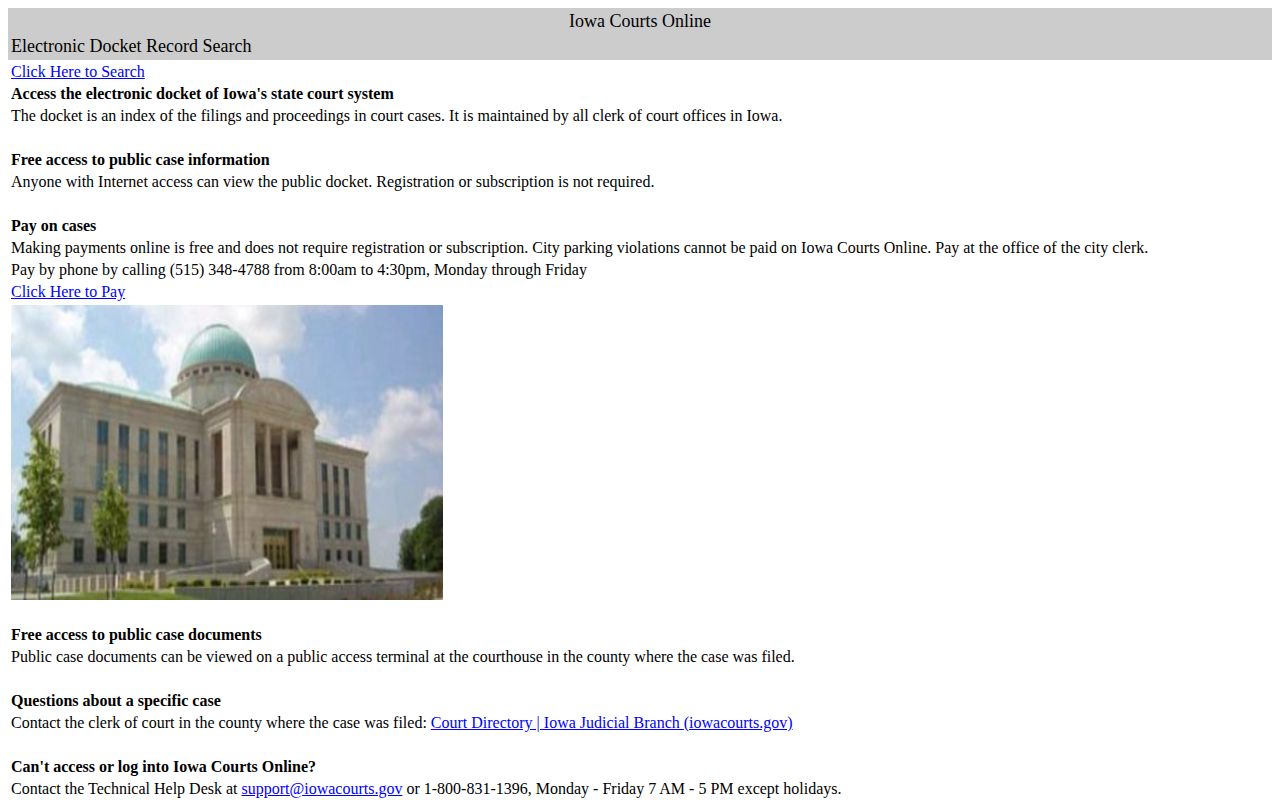
For anything after the arrest, the docket is the right place to look. Current custody stays with the sheriff and IowaVINE.
Careful wording matters. Say "the sheriff reported," "the complaint alleged," or "the docket shows," and leave it there.